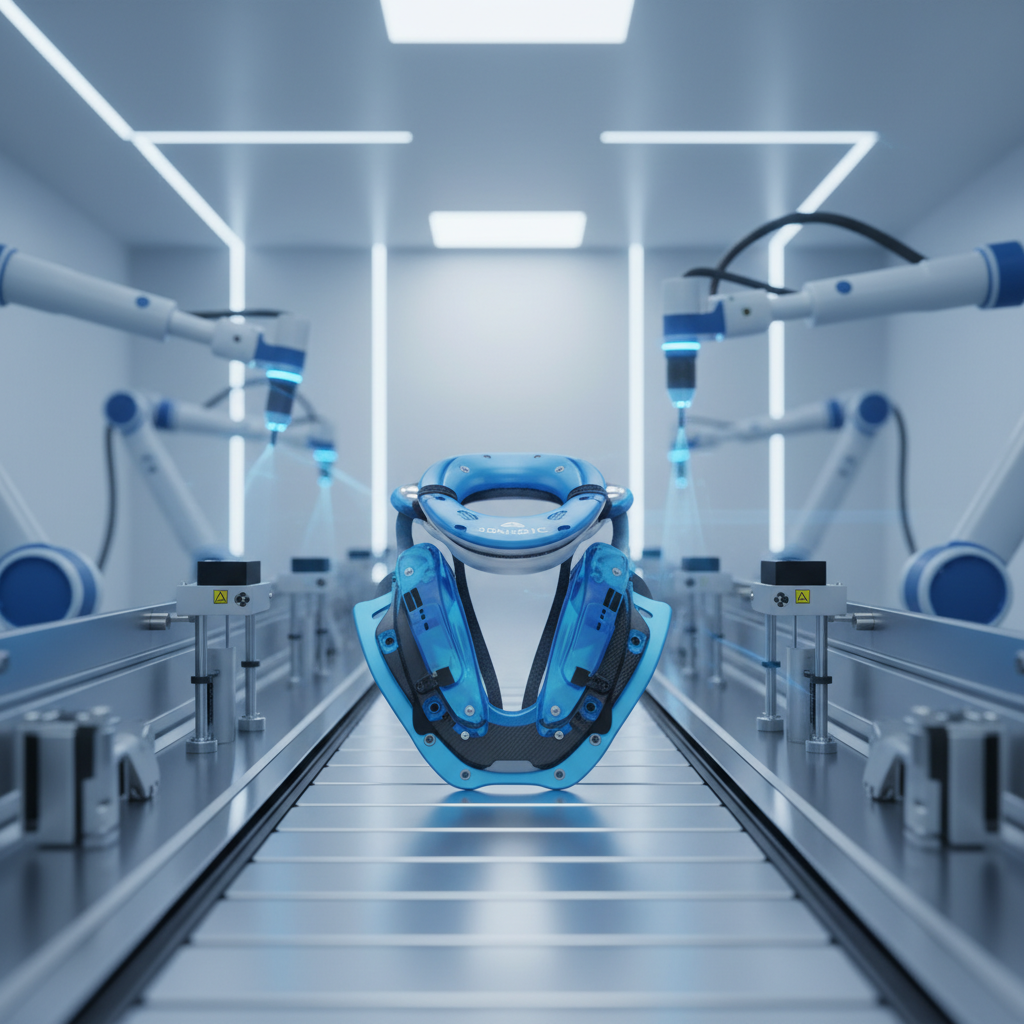
A custom neck brace serves as a critical orthopedic intervention in the field of rehabilitation medical devices, specifically designed to provide targeted stabilization for the cervical spine. Unlike generic collars, a customized approach ensures that immobilization is precisely matched to the patient's anatomical dimensions, which is essential for preventing secondary injuries during the healing process.
Many patients and healthcare providers struggle with the trade-off between rigid immobilization and user comfort. Standardized sizing often leads to pressure points, skin irritation, and neck fatigue, which can hinder recovery and reduce patient compliance in long-term rehabilitation programs.
This analysis provides a comprehensive framework for understanding the selection, application, and procurement of customized cervical supports. By examining the intersection of anatomical fit and material science, we help procurement officers and clinicians identify the most effective stabilization solutions for diverse patient needs.

Anatomical Alignment and Stabilization Principles

The primary objective of a custom neck brace is to restrict motion in the cervical vertebrae while maintaining a neutral anatomical position. Effective stabilization requires a precise distribution of force across the mandible, occiput, and clavicle to ensure that the weight of the head is transferred directly to the torso, thereby reducing the load on the spinal discs.
From a manufacturing perspective, achieving this alignment requires detailed measurement of the neck circumference and height. When the brace is custom-fitted, it eliminates the gaps often found in standard cervical collars, providing a consistent support surface that prevents micro-motions which could potentially compromise surgical grafts or fracture healing.
Material Selection for Long-Term Compliance
Material science plays a pivotal role in the effectiveness of customized orthopedic supports. The choice between high-density foams, breathable fabrics, and rigid thermoplastics depends on the required level of immobilization. Breathable fabrics are essential for preventing skin maceration, especially in humid environments or for patients requiring 24-hour wear.
Integrating weight-redistribution technology is a key advancement in modern rehabilitation devices. By utilizing multi-layered materials that vary in density, a brace can offer rigid support in structural areas while providing softer cushioning at pressure-sensitive points, such as the jawline and the base of the skull, significantly reducing the risk of pressure ulcers.
Clinical Applications Across Recovery Stages
Customized stabilization is applied across a spectrum of conditions, ranging from acute traumatic injuries to chronic degenerative diseases. In post-surgical scenarios, such as cervical fusion, a custom neck brace is used to ensure absolute immobilization during the initial ossification phase. For patients with severe whiplash or ligamentous instability, the brace provides the necessary external support to allow inflammation to subside.
As the patient progresses toward the rehabilitation phase, the requirement for stabilization often shifts. Transitioning from a rigid custom support to a more flexible, customized soft collar allows for a gradual introduction of controlled range-of-motion exercises. This stepped approach prevents muscle atrophy while continuing to protect the spinal column from sudden, uncontrolled movements.
Evaluation of Support Dimensions and Fit
The efficacy of a custom neck brace is measured by its ability to minimize gap areas and maximize the contact surface. A normalized suitability index can be used to evaluate how different fitment strategies impact patient comfort and immobilization stability. The following conceptual data illustrates the relative impact of fit precision on clinical outcomes.
This illustrative framework shows that as the precision of the anatomical fit increases (moving from standard to fully customized), the relative stability of the cervical spine improves significantly, while the reported level of neck fatigue decreases. This inverse relationship highlights why customized solutions are preferred for complex orthopedic recoveries.
Procurement Criteria for Medical Facilities
For hospitals and rehabilitation centers, sourcing a reliable manufacturer of orthopedic supports involves evaluating more than just the unit price. Key criteria include the manufacturer's ability to handle diverse sizing requirements and their capacity for rapid customization. A supplier's supply ability—such as the capacity to produce high volumes while maintaining custom specifications—is critical for large-scale healthcare operations.
Furthermore, the procurement process should prioritize materials that are machine-washable and durable. In a clinical setting, the ability to maintain hygiene without degrading the structural integrity of the brace is a primary operational requirement. Evaluation of payment terms and port logistics (such as Tianjin or Guangzhou) also ensures a stable supply chain for critical medical devices.
Common Fitment Risks and Mitigation
Incorrect fitment of a cervical support can lead to complications such as nerve compression or skin breakdown. One common error is over-tightening the brace to achieve stability, which can restrict venous return from the head or cause discomfort in the thoracic inlet. Proper fitment involves a balance between restrictive force and physiological tolerance.
To mitigate these risks, practitioners should implement a regular monitoring schedule. Because patients may experience swelling or weight loss during recovery, a custom neck brace may require periodic adjustments. Utilizing adjustable strap systems allows for fine-tuning the fit without necessitating a completely new device, ensuring continuous support throughout the healing journey.
Comparison of Custom vs. Standardized Support
Choosing between a custom and a standardized neck brace depends on the severity of the injury and the duration of the required immobilization. While standard collars are sufficient for minor sprains, complex spinal instabilities demand the precision of a customized solution. The following table outlines the key differences across various decision dimensions.
| Feature | Standard Collar | Customized Brace | Clinical Impact |
|---|---|---|---|
| Anatomical Fit | Generic Sizing | Patient-Specific | Reduced Pressure Points |
| Immobilization | Moderate | High/Precise | Better Fracture Stability |
| Patient Comfort | Variable/Low | Optimized | Increased Compliance |
| Weight Distribution | Concentrated | Evenly Spread | Lower Neck Fatigue |
| Lead Time | Immediate | Requires Measurement | Delayed Initial Fit |
| Long-term Use | Risk of Irritation | Sustainable | Lower Skin Complications |
In summary, the decision framework favors customization when the goal is maximum stabilization with minimal patient discomfort. For procurement officers, investing in customized options reduces the overall cost of care by minimizing secondary complications and accelerating the rehabilitation timeline.
Frequently Asked Questions
Custom braces provide precise anatomical alignment, which eliminates gaps and prevents the concentrated pressure points common in standard sizes. This leads to superior immobilization and significantly higher patient comfort during long-term wear.
It is achieved through detailed patient measurements of neck circumference, height, and jaw structure, which are then used to adjust the molding or cutting of the support materials to match the individual's geometry.
Yes, they are used for both. In surgical cases, they provide critical rigid stabilization; in non-surgical cases, such as severe whiplash or disc herniation, they reduce strain on the cervical ligaments.
Manufacturers often use perforated foams, moisture-wicking synthetic fabrics, and breathable mesh linings to promote airflow and reduce the risk of skin irritation.
Adjustments should be made whenever there is a noticeable change in the patient's swelling or weight, typically every 2 to 4 weeks during the acute phase of recovery.
Look for manufacturers with a proven capacity for large-scale production, a wide range of orthopedic product categories, and the ability to provide customized solutions tailored to specific clinical requirements.
Conclusion
The implementation of a custom neck brace represents a significant upgrade in the quality of cervical stabilization. By prioritizing anatomical precision and material compatibility, these devices not only improve clinical outcomes by ensuring rigid immobilization but also enhance the patient experience by reducing fatigue and skin complications. The transition from generic to customized support is a critical step in professional rehabilitation management.
For healthcare providers and wholesalers seeking high-quality rehabilitation medical devices, reviewing a manufacturer's full range of orthopedic supports is essential. Detailed product specifications and customized solutions can be explored at www.jhmedicalsupport.com to ensure the highest standards of patient care.